How Many Solar Panels Does Your Home Need?
Your panel count depends on electricity use, panel wattage, sunlight and usable roof space. This guide shows you how to make a practical estimate using your bills and installer documents.
SolarRoute · 2 Sept 2026 · 5 min read
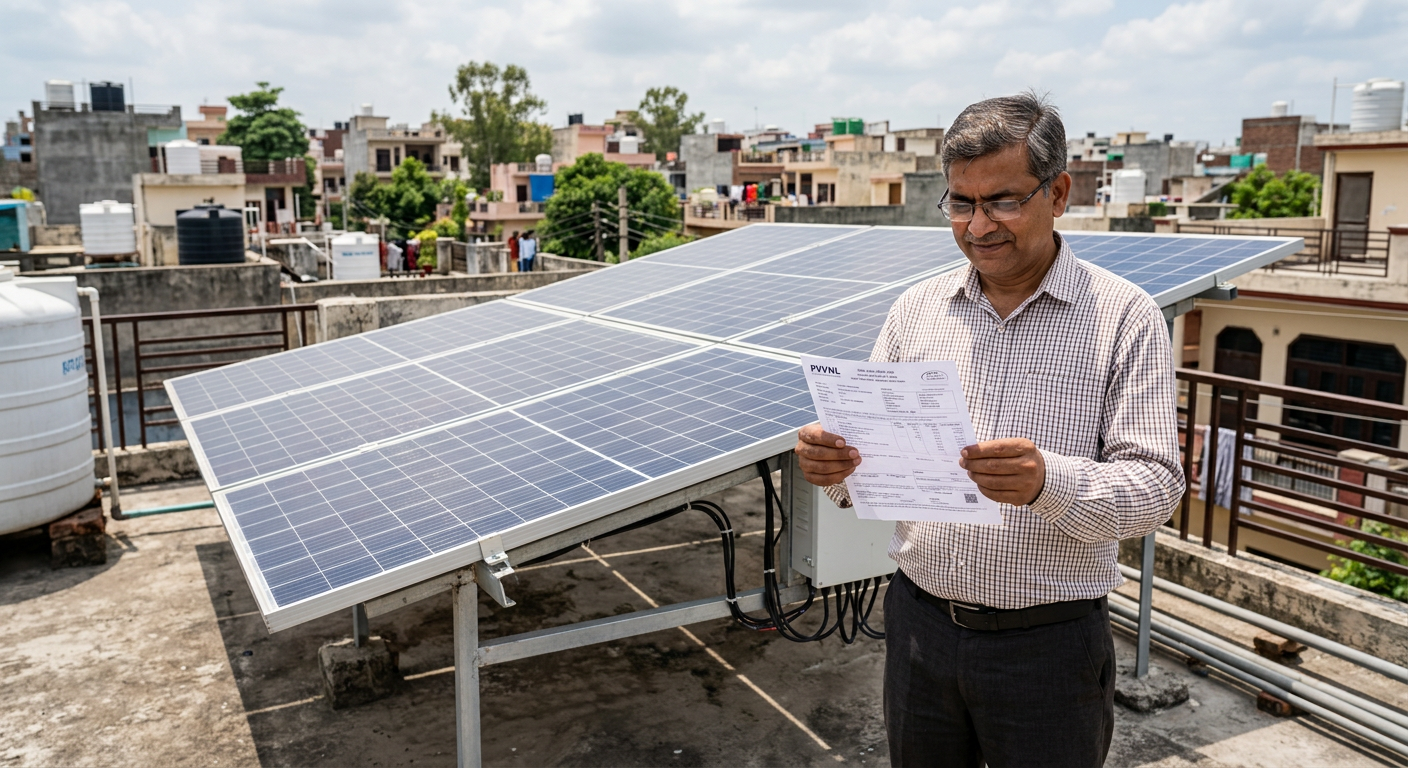
There is no single panel count that suits every Indian home. Two families with similar houses may use very different amounts of electricity. Their roofs may also receive different levels of sunlight.
The best approach is to estimate the solar system size you need first. You can then convert that size into a panel count using the wattage printed on the panel datasheet.
1. Understand what determines panel count
Your required number of panels mainly depends on five things:
- Electricity use: A home using more units will usually need a larger solar system.
- Panel wattage: Higher-wattage panels produce more power per panel under standard test conditions.
- Local sunlight: Solar output changes with location, weather and season.
- Roof conditions: Shade, water tanks, staircases and open spaces can reduce the usable area.
- Your goal: You may want to offset only regular household use, or include future loads such as an electric vehicle.
A panel count by itself can be misleading. Ten panels of one wattage may have a different total capacity from ten panels of another wattage. Always compare the complete system size in kilowatts.
2. Start with your electricity bills
Collect at least 12 months of electricity bills if possible. This captures summer cooling, monsoon weather and seasonal changes in household use.
Look for electricity consumption shown in units. One unit of electricity is one kilowatt-hour, written as kWh. Add the monthly units to find annual use, or calculate your average monthly use.
Do not size the system from the bill amount alone. Rupee charges can include fixed charges, taxes, fuel adjustments and other items that solar may not remove. Units consumed are the more useful starting point.
Also think about future changes. You may plan to add more air conditioners, an induction cooktop, a water pump or an electric vehicle. On the other hand, replacing old appliances with efficient ones may reduce use. Avoid adding a large margin without a clear reason, because an oversized system may export more electricity than you can use or receive credit for.
3. Convert electricity use into a system size
Solar system capacity is usually stated in kilowatts, or kW. You may also see kWp, meaning the combined peak rating of all panels under standard test conditions.
The basic calculation is:
Required solar capacity = annual electricity units you want to offset ÷ expected annual generation from each kW
The expected generation from each kW is not the same everywhere. It depends on your city, roof direction, tilt, shade, temperature and system losses. Ask for an estimate based on your exact roof and local conditions. Check that the estimate shows monthly or annual generation, not only a vague savings claim.
Decide how much use you want solar to cover. Complete offset may not be practical if your roof is small or heavily shaded. Your DISCOM may also apply limits to the capacity allowed for a grid-connected system. A DISCOM is the local electricity distribution company that issues your bill.
Remember that solar production changes through the day and year. A system sized around annual use can still produce less during cloudy periods and more during sunny periods. Your grid connection normally balances this through electricity import and export, subject to your state rules.
4. Turn system capacity into a panel count
Once you know the target system capacity, use the wattage of the panel being considered:
Number of panels = target system watts ÷ wattage of one panel
For example, suppose your chosen target is 3 kW and the proposed panel is rated at 540 watts. Convert 3 kW to 3,000 watts:
3,000 ÷ 540 = 5.56 panels
You cannot install part of a panel, so this design would need to be adjusted to a whole number. Six panels of 540 watts would have a combined panel capacity of 3,240 watts, or 3.24 kWp. This is only a calculation example, not a recommendation for your home.
The final count may be rounded up or down depending on roof space, inverter limits and DISCOM approval. An inverter is the device that converts the panels' direct-current electricity into the alternating-current electricity used by your home and the grid.
Do not assume that the highest-wattage panel is automatically best. Check panel dimensions as well. A larger panel may provide more watts but may not fit around roof obstacles as neatly. Use the exact model's datasheet rather than a seller's verbal description.
5. Check whether the panels fit safely
Usable roof area is not the same as total roof area. A layout should account for:
- Shade from nearby buildings, trees, parapet walls and water tanks
- Access paths for cleaning, inspection and repairs
- Space around drains, pipes, antennas and other equipment
- Safe distance from roof edges, as required by the design
- The roof's condition and ability to support the mounting structure
Ask for a panel layout showing each module, its dimensions and the shaded areas. The installer should also inspect the structure rather than judging only from a satellite image.
More panels are not always better. A shaded panel can reduce output, depending on the system design and equipment used. Moving a few panels to a clearer part of the roof may be more useful than filling every available corner.
6. Consider daytime use and net metering
Your consumption pattern affects savings even when annual use stays the same. Electricity used while the panels are generating is consumed directly by the home. Extra generation may be sent to the grid.
Net metering is an arrangement in which an approved meter records electricity imported from and exported to the grid. Eligibility, capacity limits, billing treatment and approval steps vary by state and DISCOM. Confirm the current rules before finalising the system size.
A normal grid-connected solar system usually switches off during a power cut for safety. Panels alone do not provide backup. If backup is important, discuss a compatible battery and backup design separately. This can change the equipment, cost and usable solar output.
7. Confirm approvals and subsidy conditions
Before ordering equipment, compare your proposed capacity with your sanctioned load, DISCOM requirements and roof layout. Sanctioned load is the maximum connected load approved for your electricity account.
If you plan to apply under PM Surya Ghar, check the latest eligibility rules, approved process and current subsidy information on the official PM Surya Ghar portal. Subsidy conditions and amounts can change. Do not rely on an old quotation, social media post or forwarded message.
Use this final checklist:
- Collect 12 months of electricity units.
- Decide which current and future loads you want solar to cover.
- Estimate local generation using your actual roof conditions.
- Choose a target system capacity in kW.
- Divide capacity in watts by the selected panel wattage.
- Confirm the whole-number panel count with a measured roof layout.
- Check inverter compatibility, sanctioned load and DISCOM rules.
- Verify current PM Surya Ghar requirements on the official portal.
The right number of panels is the number that matches your electricity use, fits your roof and complies with local rules. Start with units, calculate capacity and only then count panels.