1kW, 2kW, 3kW or 5kW Solar: How to Choose
The right rooftop-solar size depends on your electricity use, sunny roof space, DISCOM rules and future plans. This practical guide helps you compare 1kW, 2kW, 3kW and 5kW systems without relying on guesswork.
SolarRoute · 2 Sept 2026 · 8 min read
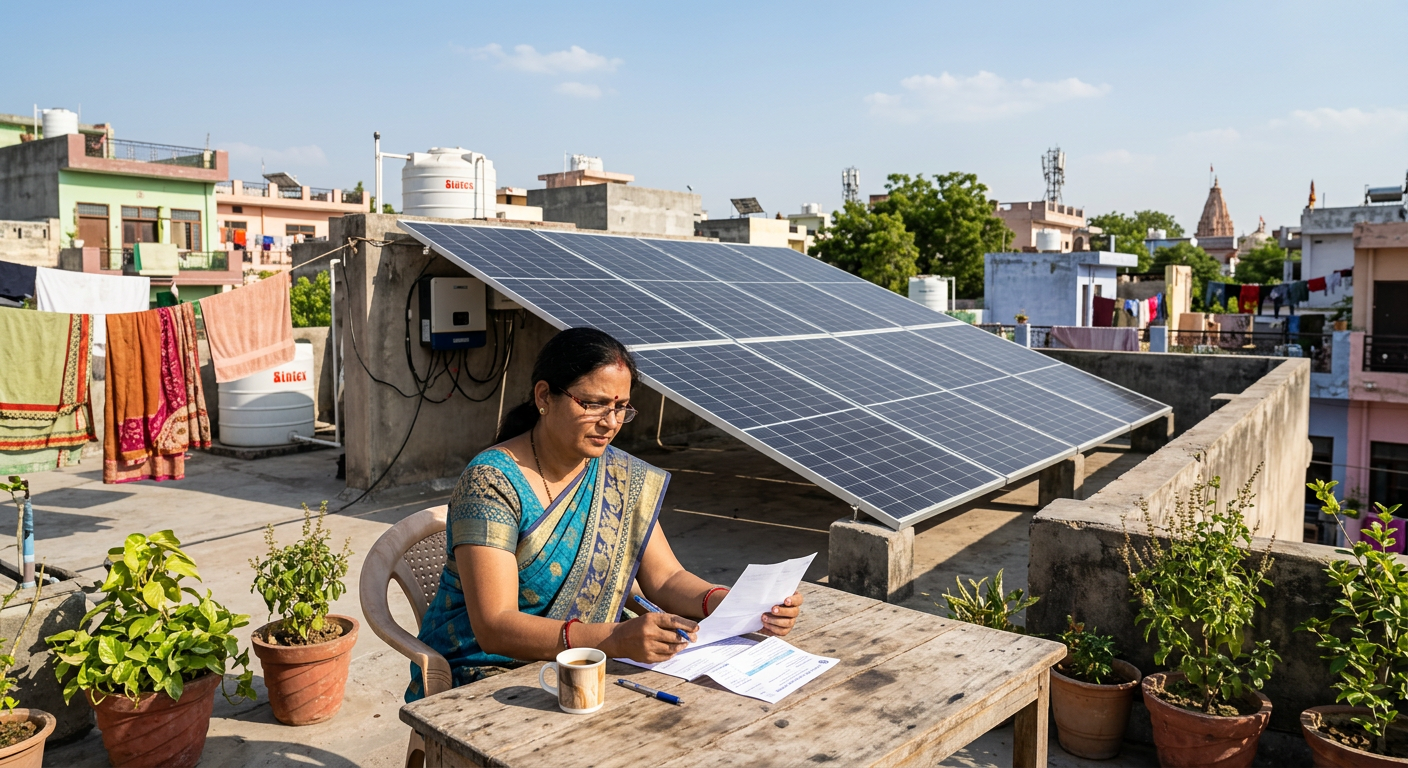
Choosing between 1kW, 2kW, 3kW and 5kW rooftop solar can feel confusing. A larger system can generate more electricity, but it also needs more clear roof space and costs more. If much of its generation goes unused or receives poor export credit, bigger may not mean better value.
The best size is the one that matches your household's electricity use, roof conditions, budget and local DISCOM rules. This guide explains how to make that choice using information from your own bills and home.
First, understand kW and electricity units
A solar system's size is shown in kilowatts, or kW. This is its rated power capacity under standard test conditions. It does not mean the system will produce that amount continuously throughout the day.
Your electricity bill records energy in units. One unit is one kilowatt-hour, or kWh. A kWh measures electricity used or generated over time.
Actual solar generation changes with:
- Your city and local sunlight
- Roof direction, slope and shading
- Panel layout and ventilation
- Dust, heat and maintenance
- Seasonal weather such as monsoon clouds
- Equipment performance and system downtime
For this reason, do not select a size using a single national generation claim. Ask for a location-specific estimate and the assumptions behind it.
Start with your electricity bills
Collect as many recent bills as practical, ideally covering different seasons. Summer air-conditioner use, winter water heating and time spent away from home can create large changes.
Write down the units used in each billing period. Also note whether the bill covers one month or a longer period. Look for unusually high or low bills and identify the reason.
Do not size solar from the bill amount in rupees alone. A bill can include fixed charges, taxes, arrears, rebates and other items that solar may not remove. Units consumed are the more useful starting point.
If you recently moved in, changed appliances or added another floor, old bills may not represent future use. Prepare a separate estimate for new loads.
Quick comparison of common system sizes
| System size | May suit | Watch for |
|---|---|---|
| 1kW | A low-use home, small clear roof or limited starting budget | May cover only a modest share if daytime and seasonal use is high |
| 2kW | A small household with moderate electricity use | Check whether expected generation matches annual consumption |
| 3kW | A household with regular appliance use and suitable roof space | Do not choose it only because it is a commonly discussed size |
| 5kW | A higher-use home or a household planning meaningful new electrical loads | Needs more usable roof area and careful review of export rules |
This table is a starting point, not a fixed appliance chart. Two similar homes can need different solar sizes because their electricity use, shading and daytime consumption are different.
When a 1kW system may be right
A 1kW system may make sense when electricity use is consistently low or only a small part of the roof receives good sunlight. It can also be a practical option when the budget cannot support a larger installation.
It is not automatically enough for a home simply because the home has basic appliances. Fans, lights, a refrigerator and other devices run for different lengths of time. Their combined monthly energy use matters more than the appliance count.
Check whether a small system still requires fixed project costs for approvals, wiring, safety equipment and installation. Comparing the complete installed price per kW can help you understand the trade-off.
When a 2kW system may be right
A 2kW system may fit a smaller family with moderate and fairly stable electricity consumption. It can provide a middle ground when 1kW appears too small but the roof, budget or usage does not support 3kW.
Review summer bills carefully. A system that looks well matched during mild months may cover a smaller share when air conditioners or coolers run frequently.
Also check daytime use. In a grid-connected system, electricity generated while the family is away may be exported to the grid. How that export is credited depends on current state and DISCOM rules.
When a 3kW system may be right
A 3kW system is often considered by households with regular use of several appliances and enough shade-free roof area. However, it should not be treated as a default size for every Indian home.
Compare estimated annual generation with your annual units consumed. Then check the month-by-month pattern. Solar production and household demand will not match perfectly every day, even if their yearly totals look similar.
If part of the roof is shaded by a water tank, nearby building, tree or parapet wall, a proposed 3kW layout may perform worse than a smaller system placed only in clear sunlight. Ask for a shade study and panel-level layout.
When a 5kW system may be right
A 5kW system may suit a larger or higher-use home with substantial clear roof space. It may also be worth considering if you expect new electrical loads, such as more air conditioning, an electric vehicle or a shift from gas to electric cooking.
Future plans should be realistic. Installing extra panels today for a possible load many years away can lead to excess exports in the meantime. Confirm how exported units are treated, whether there is an annual settlement and whether unused credits expire under your current DISCOM rules.
A 5kW proposal also needs checks for sanctioned load, connection type, meter requirements and local capacity limits. These requirements vary, so verify them with your DISCOM before paying an installer.
Solar does not work like an appliance backup chart
Homeowners sometimes ask whether 1kW can run a refrigerator or whether 5kW can run several air conditioners. For a normal grid-connected system, this is not the best way to size solar.
During sunny hours, the panels generate electricity. Your home uses available solar first, depending on the approved connection and meter setup. The grid supplies a shortfall, while surplus generation may flow to the grid. At night, the home normally uses grid electricity unless a battery or another backup source is present.
A standard grid-connected solar system generally shuts down during a power cut for safety. If backup is important, ask about a compatible hybrid or battery system. A battery stores energy for later use, but it adds cost and requires separate sizing.
Check how much roof is genuinely usable
Total terrace area is not the same as usable solar area. Installers need to leave space around obstacles and provide safe access for cleaning and repairs.
Common restrictions include:
- Water tanks, stair rooms and satellite dishes
- Shadows from nearby buildings, trees and parapet walls
- Areas needed for drying clothes or future construction
- Weak roofing or waterproofing concerns
- Required access paths and safe edge clearances
Do not rely only on a quick satellite image. Ask for an on-site survey, a measured layout and a structural assessment where needed. If you may build another floor, discuss whether solar can be moved and what that could cost.
Understand self-use, export and savings
Self-use means using solar electricity in your home while it is being generated. Export means sending surplus solar electricity to the grid.
The financial value of each can differ. A self-used unit can reduce electricity bought at your applicable tariff. An exported unit is handled according to the current metering and settlement rules in your area.
Ask your DISCOM:
- Whether your connection is eligible for rooftop solar
- Which metering arrangement applies
- How exported electricity is credited
- Whether there are system-size or sanctioned-load limits
- How fixed charges and minimum charges are treated
- What happens to unused credits at settlement
Rules can change. Use the latest DISCOM documents rather than an old quotation, social-media post or neighbour's experience.
Factor in PM Surya Ghar support carefully
Eligible residential consumers may be able to apply under PM Surya Ghar. Subsidy eligibility, required documents, approved processes and applicable amounts should be checked on the official portal at the time you apply.
Do not select a system size only to reach a subsidy category. First decide what capacity suits your roof and electricity use. Then check what current support may apply.
Use the official PM Surya Ghar portal and your DISCOM's official website. Follow the stated application sequence. Confirm vendor, equipment, inspection, meter and bank-detail requirements before making payments. SolarRoute does not sell systems or pass your details to installers.
A practical method for choosing your size
- Record your consumption. Add the units from your bills and note seasonal peaks.
- Adjust for planned changes. Include only likely additions such as an electric vehicle, extra air conditioner or new floor occupancy.
- Inspect the roof. Identify clear areas, obstacles, shading and access needs.
- Get a location-specific generation estimate. Ask for monthly and annual figures, not only a broad daily claim.
- Compare generation with consumption. Check whether the proposed system is likely to produce much more than you use.
- Review daytime demand. Consider when major appliances run and how much generation may be exported.
- Verify DISCOM rules. Confirm eligibility, capacity limits, metering and settlement directly.
- Compare complete proposals. Check equipment, warranties, structure, approvals, safety work, monitoring and after-installation support.
Ask the installer to show calculations for more than one size. For example, compare 2kW with 3kW or 3kW with 5kW using the same roof, tariff and performance assumptions.
Common sizing mistakes to avoid
- Choosing from one high bill: A seasonal spike may not represent the full year.
- Using rupee savings as guaranteed output: Tariffs, weather, consumption and export rules can change.
- Ignoring shade: A larger shaded array may be less useful than a smaller clear one.
- Assuming solar removes the entire bill: Fixed charges and other bill items may remain.
- Confusing solar with backup: Ordinary grid-connected solar normally does not power the home during an outage.
- Buying for an uncertain future: Add only loads you reasonably expect.
- Skipping approvals: Confirm the official process before installation or payment.
Questions to ask before saying yes
- Why is this size recommended for my actual bills?
- What monthly generation is expected, and what assumptions were used?
- How was roof shading measured?
- How much electricity may be self-used and exported?
- Does the proposal comply with current DISCOM requirements?
- Is the quoted price before or after any subsidy?
- Which costs are excluded?
- Will the system work during a power cut?
- What monitoring, maintenance and complaint support are included?
The simple answer
Choose 1kW when use and usable roof area are low. Consider 2kW for moderate needs, 3kW for broader household consumption and 5kW for higher use or credible future loads. These are only broad profiles.
Your bills, roof survey, generation estimate and current DISCOM rules should make the final decision. A well-matched smaller system can be more sensible than a larger system chosen only because it promises higher generation.